What pet owners say
★★★★★5.0on Google Play · 22 reviews- ★★★★★
“Booking appointments for my pet is quick and hassle-free. The team guided me throughout the entire process, answered my questions promptly, and genuinely cared about my pet. The service is also very affordable.”
Ayesha A. · Appointment booking · Google Play
- ★★★★★
“My love bird Mithu's foot is completely fine now. Thank you so much to the MatchVet team for your guidance and support.”
Arayn K. · Guidance for a pet bird · Google Play
“The whole process was very smooth — quality vet care within my locality without the hassle of finding a good vet myself. 10/10 would recommend!”
Mahnoor B. · Booking · WhatsApp
Ask Minsa if your pet needs a vet right now
Tell Minsa what’s going on — by text, voice note or photo. She asks the right questions, tells you how soon your pet needs a vet and what to do until then, and connects you with a verified vet if you want one.
Ask Minsa — try freeor chat on WhatsAppMinsa is an AI assistant, not a vet. She doesn’t diagnose or prescribe.
- My cat has not eaten since last night 😟
- I’m sorry — let’s work it out together. Is she drinking water and passing urine normally?
- She drinks, but she’s hiding
- Thanks. A vet should see her today. Want a video consult now or a vet at home?
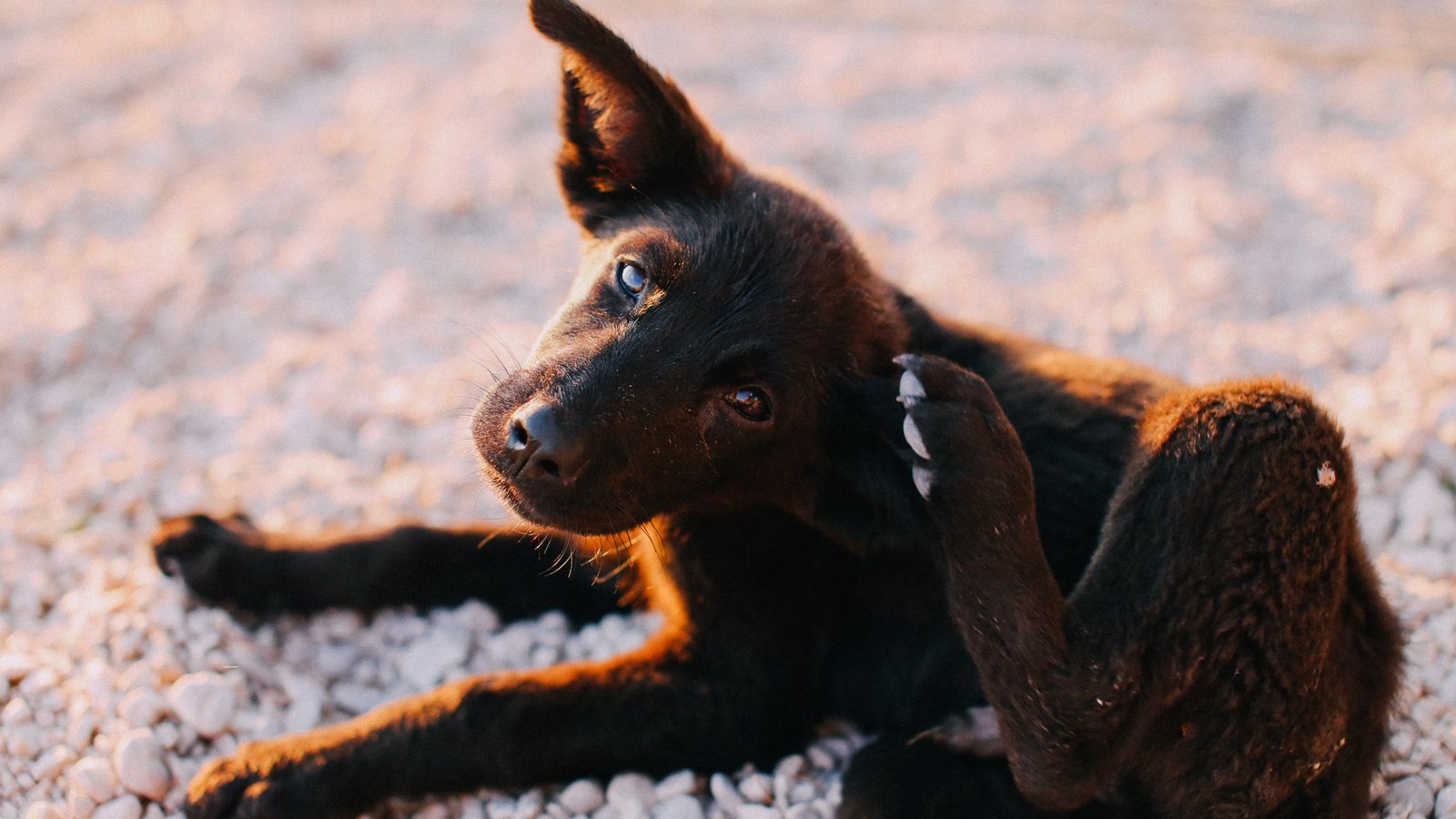
What's actually making your dog itch
- Fleas & flea-allergy — even a few bites can set off intense itching, classically at the base of the tail. Often the first thing to rule out. See ticks & fleas.
- Allergies — environmental (atopy: dust, pollen, mould) or food. Typically itchy paws, ears, face, belly and armpits, and recurring ear infections.
- Mange (mites) — sarcoptic mange is intensely itchy and contagious. See mange in dogs.
- Skin infections — yeast and bacteria cause redness, smell, and greasy or crusty skin, and thrive in monsoon humidity. Often secondary to one of the above.
Signs to watch
- Scratching, rubbing, or licking and chewing the paws.
- Recurring ear infections (head-shaking, smell, discharge) — a common allergy sign.
- Red skin, hair loss, scabs, or "hot spots" (raw, moist patches).
- A greasy or smelly coat — usually a yeast/bacterial infection.
Why the cause matters (and why not to self-treat)
Human antihistamines and steroid creams only mask itching — while fleas, mites, or infection keep spreading, and some human products are unsafe for dogs. The lasting fix is targeting the real cause, which a vet identifies with a simple skin scrape and exam.
Treatment usually combines strict flea control, treating any mange or infection, and for allergies a mix of medicated shampoos, a food trial, and modern prescription anti-itch medication. Most itchy dogs improve dramatically once the right cause is hit.
Get it looked at
If the itch is constant, the skin is red/smelly, or ears keep flaring, book a vet — a home-visit vet can do the skin scrape and start treatment without a clinic trip. Post your pet's needs and budget, and verified vets respond with offers.
Frequently asked questions
Why is my dog so itchy but has no fleas?
The commonest 'no-flea' itch is allergy — either environmental allergy (atopy: dust, pollen, mould) or a food allergy — often showing as itchy paws, ears, face, belly and armpits. Mange (mites) and yeast or bacterial skin infections also itch without obvious fleas. A vet identifies which with a skin scrape and exam, because the treatments differ.
Why does my dog's skin get worse in the monsoon?
Heat and humidity let yeast and bacteria thrive on the skin, and damp fur and paws stay wet — so allergies flare and secondary infections set in. Keeping your dog dry, especially between the toes and in skin folds, and staying on top of flea control, helps a lot during monsoon.
Can I give my dog human antihistamines or steroids for itching?
Not without a vet's guidance. Some human antihistamines are unsafe or ineffective at the wrong dose, and human steroid creams can be licked off and cause harm. More importantly, they only mask itching while the real cause (fleas, mites, infection, allergy) goes untreated. A vet can prescribe safe, effective, dog-specific treatment.
How is a dog's itchy skin treated?
By finding and fixing the cause: strict flea control, treating any mange or skin infection, and for allergies a mix of medicated shampoos, a food trial if a food allergy is suspected, and modern anti-itch medication your vet prescribes. Most itchy dogs improve a lot once the right cause is targeted.
Kutta bohot khujli karta hai — kya karun?
Khujli ki wajah pissu (fleas), allergy, mange (cheechar/mite), ya skin infection ho sakti hai — khaas kar barsat mein. Insano wali dawai apni marzi se na dein. Vet skin check kar ke asal wajah dhoond kar sahi ilaj dega. MatchVet par ghar per vet skin scraping bhi kar sakta hai.
Sources & further reading
- Merck Veterinary Manual — Allergies and itching (pruritus) in dogs
- VCA Animal Hospitals — Atopy and allergic dermatitis in dogs
- Companion Animal Parasite Council (CAPC) — Fleas and mites
Medically reviewed by Dr. Yahya Nawaz (DVM, RVMP) — Founder of MatchVet · In-charge, Civil Veterinary Hospital, Ghang, Sheikhupura. This is general guidance, not a diagnosis; for your own pet, ask a verified vet.